“For Zion’s sake I will not keep silent, for Jerusalem’s sake I will not remain quiet, till her vindication shines out like the dawn, her salvation like a blazing torch.” Isaiah 62:1
I distinctly remember sitting in synagogue in High Point, North Carolina, on Yom Kippur, Saturday, October 6, 1973. Somehow word reached us that Israel had been attacked. I ran outside, jumped into my parents’ brown 1968 Buick Skylark, and turned on the radio. For the next hour, I listened as reports of the war unfolded. Zion had been invaded. I was thirteen years old, but having grown up in a religious Jewish home, Israel was already deeply rooted in my identity.
Just five weeks earlier, on September 1, 1973, I celebrated my Bar Mitzvah. My Haftarah (reading from the Prophets), associated with my Torah portion, was Isaiah 51:12–52:12. It began with God’s assurance to Israel: “I, even I, am he who comforts you” (Isaiah 51:12). Later, Isaiah announces good news, peace, and salvation to Zion. I could never have imagined that just weeks after reading those promises, I would be listening to reports of Israel fighting for its survival.
Six years later, while attending the University of North Carolina, I came to believe that Jesus is Israel’s promised Messiah. In 1983, I began a lifetime of ministry sharing that message with my people. Today, I see a remarkable connection between the words I read at thirteen and the calling God placed upon my life. Isaiah 62:1 captures that calling: “For Zion’s sake I will not keep silent, for Jerusalem’s sake I will not remain quiet.” Three words stand out to me: Zion, sake, and quiet.
ZION: Understanding God’s Heart for His People
What exactly is Zion? Originally, Zion referred to a geographical location. In 2 Samuel 5:7, David captured the fortress of Zion, which became known as the City of David. Over time, its biblical meaning expanded to represent Jerusalem, the center of Jewish worship and national identity. Psalm 132:13 declares, “For the LORD has chosen Zion, he has desired it for his dwelling.” Throughout the prophets, Zion also represents the Jewish people in relation to God’s covenant promises and plans for restoration. Zion represents a people, a place, and a promise.
Today, Zion carries additional meanings. Modern Zionism emerged in the nineteenth century as a movement supporting Jewish national self-determination in their ancestral homeland. For many Jewish people, Zionism represents the right to live securely in a Jewish homeland, particularly after the Holocaust. Unfortunately, the word Zionist has increasingly become controversial and is sometimes used as a substitute for Jew in expressions of hostility. Legitimate disagreements concerning Israeli government policies certainly exist. But criticism crosses into antisemitism when Jewish people collectively are blamed, threatened, or denied rights afforded to others.
As believers, we must not allow contemporary political controversies to overshadow Zion’s biblical significance. Long before modern political Zionism existed, God spoke through the prophets concerning Zion, Jerusalem, and the Jewish people. In Isaiah 49:14–16, Zion fears that God has forgotten her. God’s response is remarkable. He compares His faithfulness to a mother’s love and declares that He has engraved Zion on the palms of His hands. Jeremiah 31:35–37 reinforces God’s enduring commitment to Israel, comparing the nation’s continued existence before Him to the established order of creation. The Jewish people remain significant in God’s redemptive purposes, not because of their righteousness, but because of His faithfulness. God has not forgotten Zion. Neither should we.
SAKE: Understanding God’s Ultimate Purpose for Zion
The expression for someone’s sake means acting for that person’s benefit or ultimate good. So when Isaiah declares, “For Zion’s sake,” we should ask what is ultimately for Zion’s good? Political security? Certainly. Freedom from persecution? Absolutely. Preservation of Jewish identity and heritage? These are important concerns. But Scripture reveals that God’s ultimate purpose for Zion extends beyond political stability or national preservation. God’s purpose includes redemption, restoration, and salvation through the Messiah.
Isaiah 62:1 concludes, “till her vindication shines out like the dawn, her salvation like a blazing torch.” Jeremiah 31:31–34 promises a new covenant with Israel and Judah. Ezekiel 36:26–27 describes God’s promise to give His people a new heart and put His Spirit within them. These promises concern more than returning to a land. They anticipate spiritual transformation, and at the center stands the Messiah. Isaiah 59:20 declares, “The Redeemer will come to Zion, to those in Jacob who repent of their sins.” That Redeemer is Jesus.
Back to the passage I read at my Bar Mitzvah. Isaiah 52:7 announces good news, peace, and salvation to Zion. Paul quotes this passage in Romans 10:15 while explaining the necessity of proclaiming the Gospel. What a remarkable connection! At thirteen, I stood in synagogue reading about the good news of salvation. I read the verse “How beautiful on the mountains are the feet of those who bring good news, who proclaim peace, who bring good tidings, who proclaim salvation, who say to Zion, “Your God reigns!”
Six years later, I discovered the Messiah who makes that salvation possible! Then my feet became those beautiful feet bringing the Good News to my people!
I relate to Paul. He loved our people deeply and recognized God’s promises to Israel. But his greatest desire was their salvation. That must remain our desire as well. We should support Israel’s right to exist, defend Jewish people against antisemitism, provide humanitarian assistance, and celebrate Jewish culture. These are meaningful expressions of love, but none can replace proclaiming the Gospel. God has given the church a responsibility to demonstrate Messiah’s love so Jewish people might be drawn to Him. Their physical security matters. Their freedom from persecution matters. Their national future matters. But their eternal salvation matters more.
QUIET: Why We Cannot Remain Silent
“For Zion’s sake I will not keep silent, for Jerusalem’s sake I will not remain quiet…” (Isaiah 62:1). Isaiah expresses determination not to remain silent until God’s purposes for Zion are accomplished. Later, Isaiah 62:6–7 describes watchmen who continually call upon the Lord until Jerusalem becomes a praise in the earth. There is persistence, urgency, and unwavering commitment. Those qualities should characterize our ministry today.
We cannot remain quiet when antisemitism raises its ugly head in our communities, on college campuses, in political conversations, or within the church. We cannot remain quiet when Jewish people are threatened or intimidated simply because they are Jewish. We cannot remain quiet when the church becomes confused about God’s continuing purposes for Israel. And we certainly cannot remain quiet about Jesus. We are building relationships with Jewish people, strengthening connections between the church and the Jewish community, and proclaiming Jesus as Israel’s Messiah. Our methods have changed...but our message remains the same.
Paul declared in Romans 1:16, “For I am not ashamed of the gospel, because it is the power of God that brings salvation to everyone who believes: first to the Jew, then to the Gentile.” We want Jewish people to know Christians genuinely love them. We want churches to understand the Jewish foundation of their faith and God’s enduring faithfulness to Israel. Most importantly, we want Jewish people to hear that their Messiah has come.
Speaking up requires wisdom. We can disagree without being disrespectful, proclaim truth without attacking others, and stand against antisemitism without making every political disagreement a theological battle.
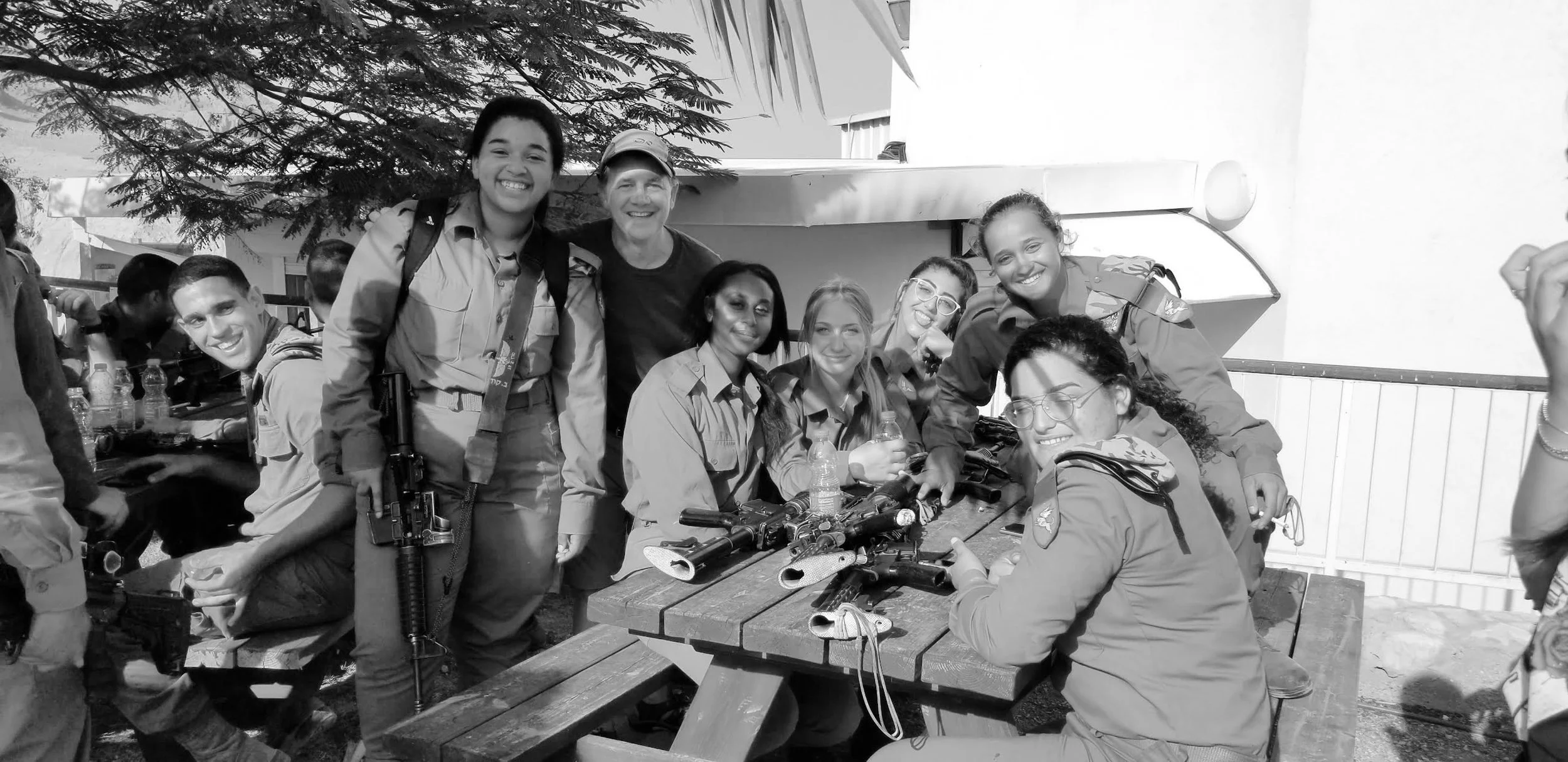
Through The Shalom House, relationships within the Jewish community, and partnerships with churches, we create opportunities for genuine friendships and meaningful conversations. Sometimes those begin with a direct presentation of the Gospel. Other times they begin around a dinner table, during a Jewish festival, or through simple friendship. We want Jewish people to know the Messiah. Below is a picture of me with Israeli soldiers in 2023. I talked to them about my hope in Yeshua (Jesus). I do not know what happened to them on October 7th. May God have protected them all.
For Zion’s Sake, Will You Stand and Shout With Us?
When I sat in that Buick Skylark in 1973, I was a frightened thirteen-year-old Jewish boy listening to reports of war. I could never have imagined the journey God had prepared for me. Today, I remain concerned about my people’s future, but I know something I didn’t understand then. The greatest hope for Zion is found in the Messiah.
By Murray Tilles
Founder and Executive Director